Your cart is empty
Turn a favorite photo of your cat into a gift. It only takes a minute to see a free AI preview.
or browse Christmas cat gifts ›
Your cart is empty
Turn a favorite photo of your cat into a gift. It only takes a minute to see a free AI preview.
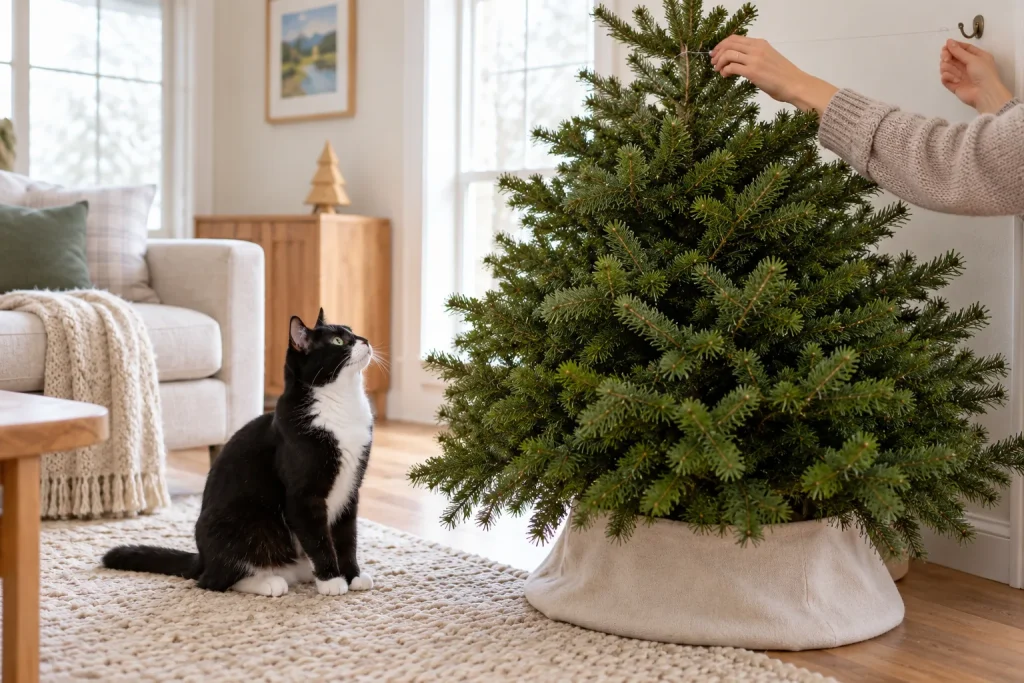
or browse Christmas cat gifts ›A cat proof Christmas tree comes down to a few basics: anchor it so it can’t tip, cover the water, skip tinsel and ribbon, hang only unbreakable ornaments on the lower branches, and protect every cord. Your cat isn’t being naughty. To a cat, a new tree is a climbing frame, a toy box and a water bowl rolled into one. Here’s how to keep the tree standing and your cat safe all season.
Everything about a decorated tree speaks to a cat’s instincts. Branches invite climbing, dangling ornaments move like prey, lights blink, and the stand holds a fresh bowl of water that smells like the outdoors. The tree also arrives overnight in a spot your cat thought it owned.
The Cornell Feline Health Center warns that trees can topple and fragile ornaments can shatter, and recommends non-breakable decorations at cat height. A good rule of thumb: if it isn’t safe for a toddler, it isn’t safe for a cat. Kittens and young, playful cats are the most likely to test the tree, but even calm seniors can surprise you.
Both work in a cat home, and each has its own trade-offs.
Set the tree up a few days before you decorate it. Let your cat sniff, explore and lose interest in a plain green tree first, and the ornaments will be less of a shock.
Some classic decorations simply aren’t worth the risk in a home with cats.
Tinsel tops the list. The ASPCA’s holiday safety tips warn that swallowed tinsel can cause severe vomiting and a blocked digestive tract that may need surgery. Ribbon, curling ribbon, thread, bead garlands and popcorn or cranberry strings carry the same linear foreign body risk. Swap them for wide fabric bows tied tightly to the branch, or leave them off.
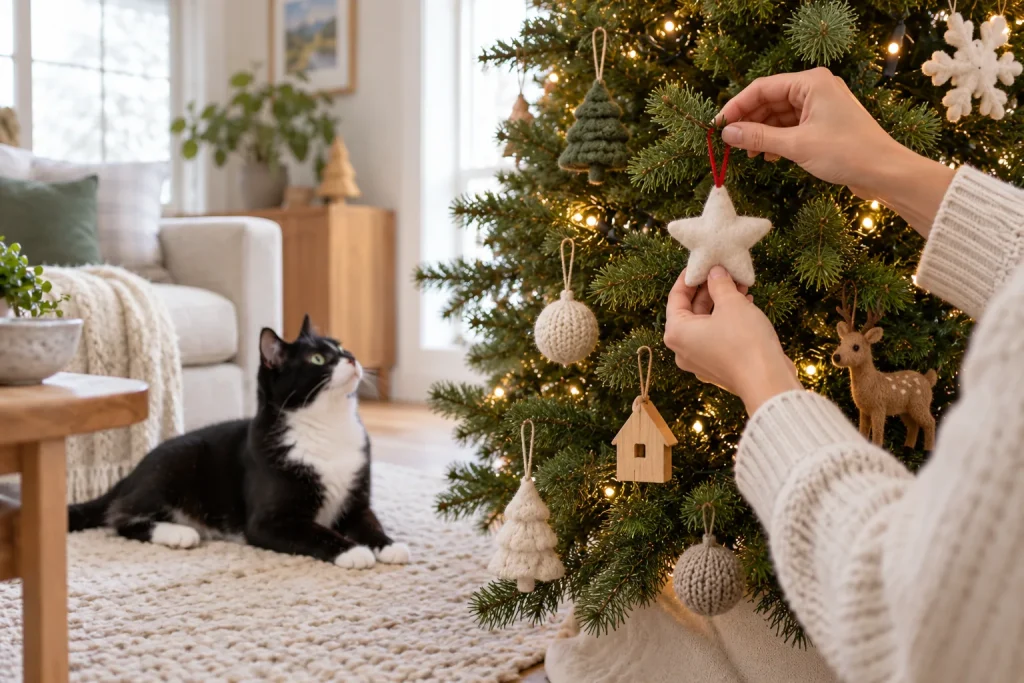
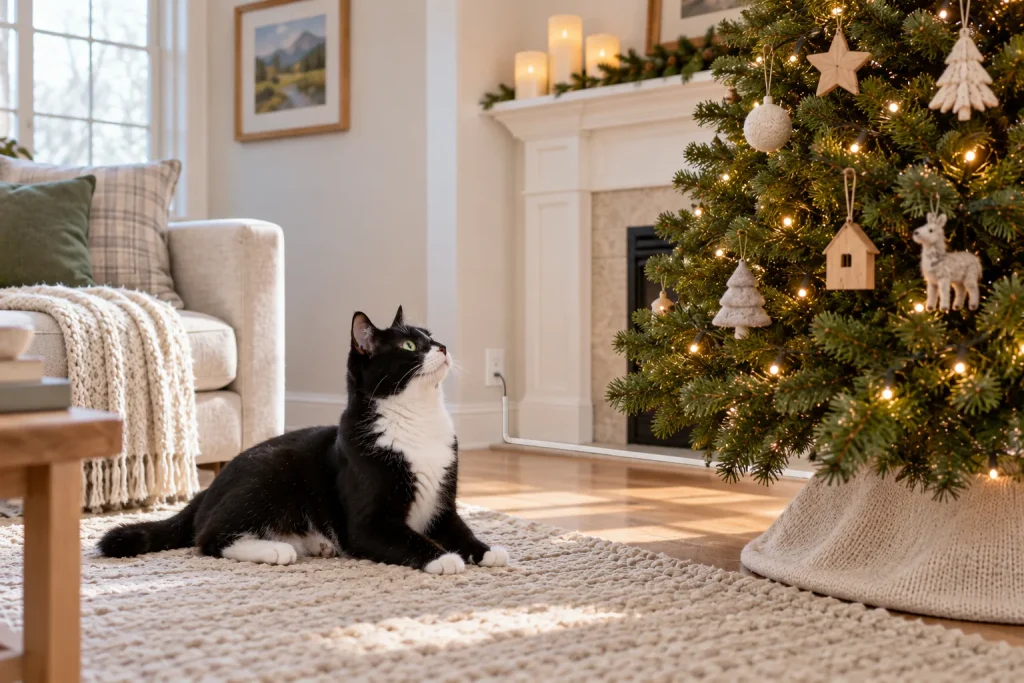
A batted glass ball becomes sharp shards that can cut paws and mouths. Keep glass, ceramic and other breakable pieces high up, and use felt, wood, wool or shatterproof plastic at cat height.
The ASPCA warns that salt-dough ornaments, even fully dried ones, can cause life-threatening electrolyte imbalances if a pet eats them. Keep candy canes, foil-wrapped chocolates and popcorn strings off the tree, too: chocolate is toxic to pets, and wrappers and strings are easy to swallow.
Ornament caps, hooks, bells and foam or polystyrene filler are all easy to swallow. Do a quick sweep under the tree each morning. The same thinking applies to stockings: our cat stocking stuffers guide sticks to small gifts chosen with a curious cat in mind. For year-round ideas that look good and survive paws, see cat-friendly home decor.
A chewed electrical cord can cause mouth burns or a potentially deadly shock. Run cords along walls and behind furniture, cover the exposed sections with sturdy cord protectors, and unplug the lights when nobody is home or awake to watch. Wrap lights deep into the branches instead of letting strands dangle.
Real candles and cats don’t mix, since a tail or a playful paw can knock one over. Battery-operated candles give the same glow without the flame.
Several popular holiday plants are toxic to cats. Know these before you buy a plant or accept a bouquet.
Call your veterinarian or an emergency animal hospital right away if your cat swallowed tinsel, ribbon, a hook, a glass shard, a plant or tree water with additives, or shows signs such as vomiting, drooling, not eating, hiding, straining in the litter box or a sore belly.
Hosting a holiday meal as well? Our guide can cats eat turkey covers the foods to keep off your cat’s plate.
A cat-proof tree can still feel personal. Keep keepsake ornaments on the upper branches, where they stay out of paw reach, and give your cat a starring role that doesn’t involve climbing.
Each piece starts with your photo: you upload it, see a free AI preview (an illustration only), and our designers prepare the final artwork from the original photo and check it by hand before printing. Browse more Christmas cat gifts, or find ideas for the other cat people on your list in our holiday gift guide for cat lovers. For anything personalized, order at least three weeks before you need it, and earlier in December. Free standard shipping on every US order.
For a festive picture without tree drama, try our cat Christmas photo ideas, and plan the rest of the season with our cat holidays calendar.
Yes. Swallowed tinsel can tangle in the intestines and cause severe vomiting and a blockage that may need surgery, so it’s best left off the tree in a cat home.
It can be. Standing tree water can grow bacteria that may upset a cat’s stomach, and additives make it worse, so use plain water and cover the stand.
Fir, spruce and pine needles are considered mildly toxic to cats, mostly because of their oils, which can irritate the mouth and stomach. Swallowed needles can also injure or block the gut, so discourage chewing and call your veterinarian if your cat seems unwell.
Anchor the tree, make the base unappealing with foil or double-sided tape, keep the lower branches plain, and give your cat a cat tree and daily play as an alternative.
Lilies are the most dangerous and can cause kidney failure. Amaryllis, mistletoe and holly are also toxic, and poinsettia can cause mild to moderate irritation.
Questions about a photo or an order? Message us, we usually reply within 1 business day.