Your cart is empty
Turn a favorite photo of your cat into a gift. It only takes a minute to see a free AI preview.
or browse Christmas cat gifts ›
Your cart is empty
Turn a favorite photo of your cat into a gift. It only takes a minute to see a free AI preview.
or browse Christmas cat gifts ›Halloween cat safety comes down to a few simple rules: keep candy and wrappers out of reach, use battery lights instead of candles, skip costumes your cat does not enjoy, and give your cat a quiet room away from the front door on trick-or-treat night. Below is a checklist based on veterinary guidance, what to do if something goes wrong, and cute ideas that let your cat join the fun safely.
When Halloween lands on a Friday or Saturday, expect more parties, more visitors and a longer evening of doorbells. Stick this list on the fridge and you’ve covered the biggest risks:
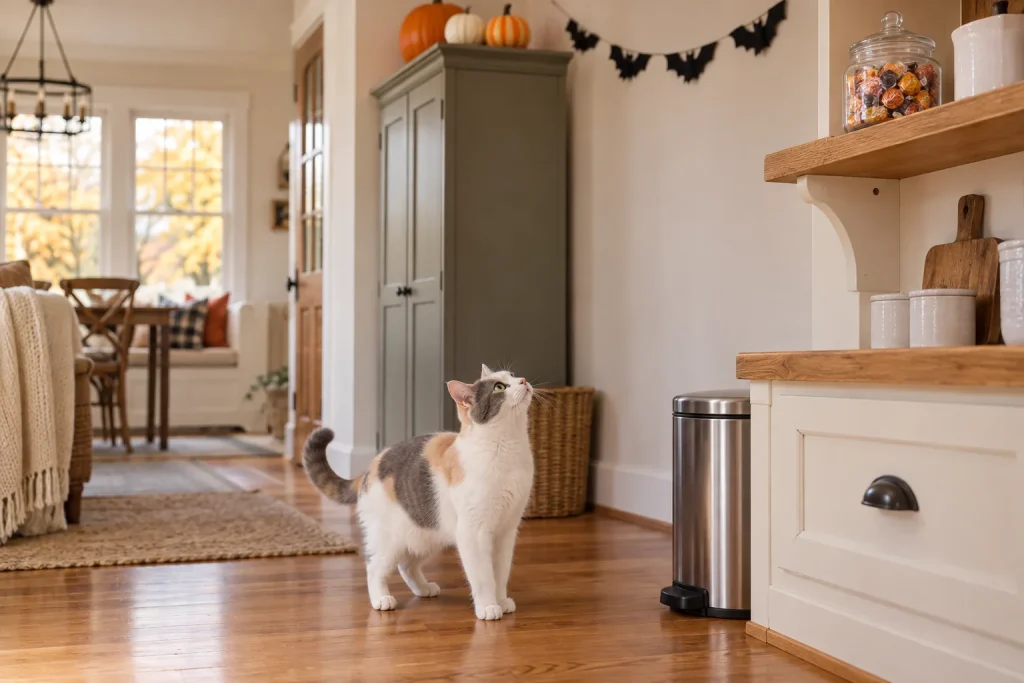
Most cats are not as candy-crazy as dogs, but curious cats do lick, chew and bat things off tables. The ASPCA’s Halloween safety tips warn that chocolate is dangerous for cats and dogs, especially dark or baking chocolate, and that sugar-free candies containing the sweetener xylitol can cause serious problems in pets. The AVMA’s advice is just as clear: do not feed pets Halloween candy at all.
Wrappers can be as much of a problem as the candy. Crinkly foil and cellophane make irresistible toys, and swallowed pieces can cause choking or a blockage in the gut. Lollipop sticks and the string on treat bags are risky too. Keep bowls on a high shelf or in a closed cabinet, and ask kids to sort their haul at a table where the cat is not allowed.
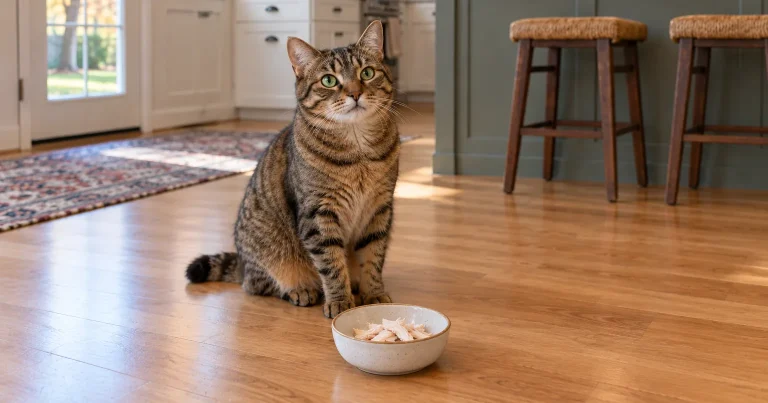
Want your cat to have a treat? Offer one made for cats, or a tiny piece of plain cooked chicken, and leave the human sweets out of it.
Cats love to chew these bendy, glowing toys. The liquid inside is probably not toxic, but the AVMA notes, as reported by Veterinary Practice News, that it tastes really bad and can make pets drool heavily and act strangely. A cat that bites one may foam at the mouth or race around, which is frightening to watch. Call your veterinarian for advice, and keep glow sticks on kids’ wrists, not on the floor.
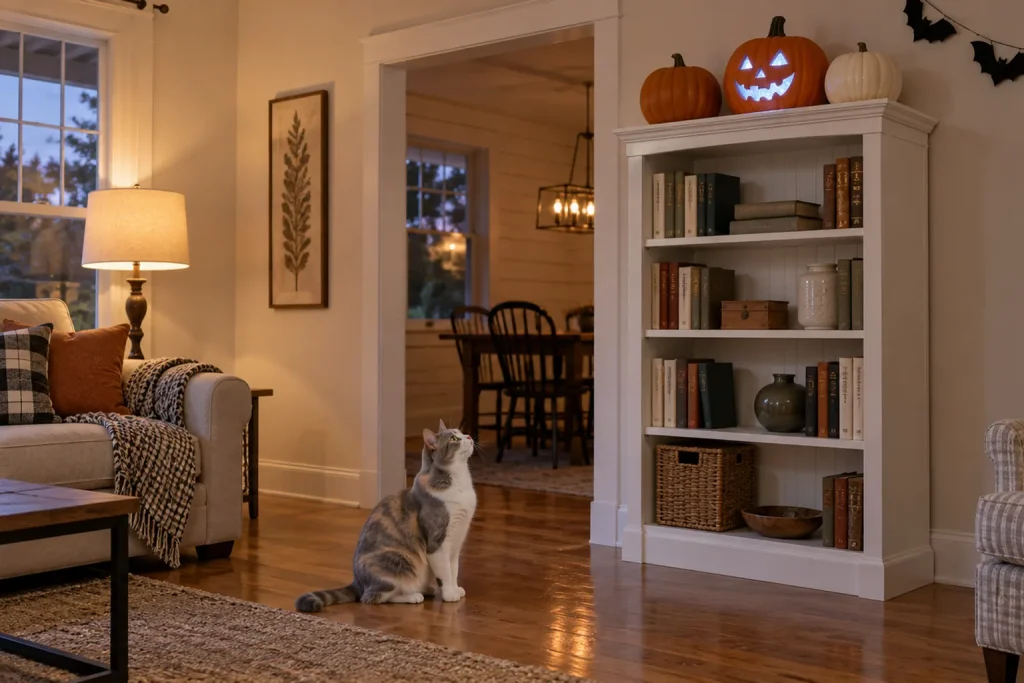
A lit pumpkin is easy for a cat to knock over, and the ASPCA points out that curious kittens are especially at risk of being burned by a candle flame. Use battery-operated LED lights in carved pumpkins and lanterns. They look just as spooky, and a tail swish won’t start a fire.
Raw pumpkins and decorative corn are not considered highly toxic, but chewing on them can upset a cat’s stomach, and a carved pumpkin can start to rot or grow mold within days. Display them where your cat cannot nibble, and compost carved pumpkins as soon as they soften.
For most cats, the kindest costume is no costume. The ASPCA suggests only dressing pets in costumes they seem to enjoy and making sure an outfit does not limit movement, sight, breathing or meowing. The AVMA adds that costumes should fit properly, have no pieces that can be chewed off, and that pets must never be left alone while wearing one.
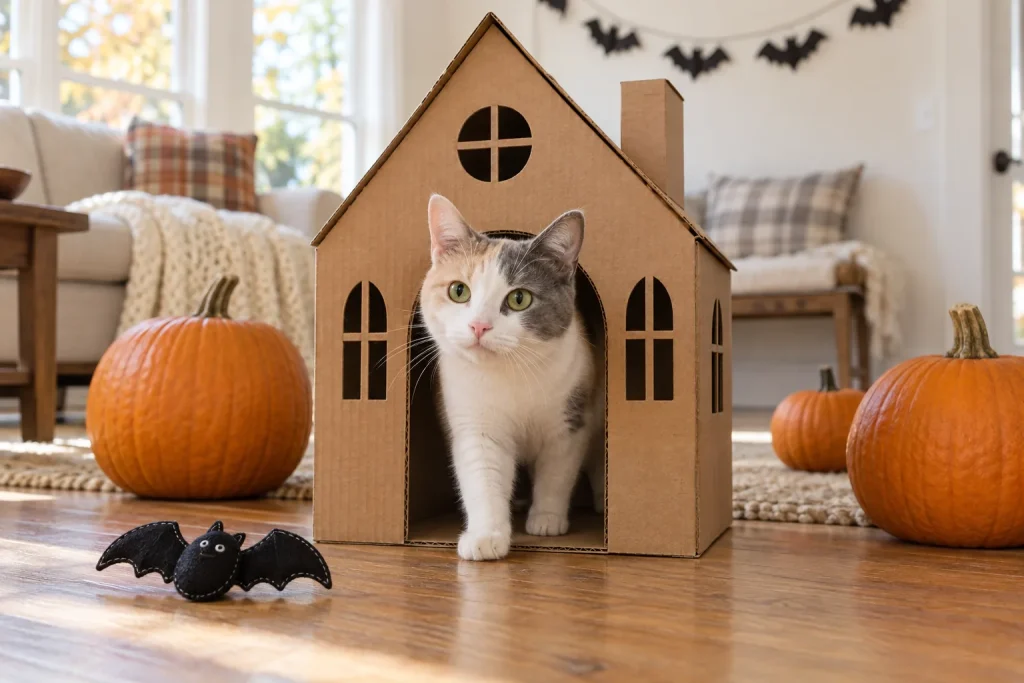
Signs your cat is not having fun include flattened ears, a twitching or lashing tail, freezing in place, hiding or trying to wriggle out. If you see any of them, take it off. For festive photos, a photo app can add a witch’s hat or bat wings in seconds, and your cat will never know.
The doorbell rings dozens of times, strangers in masks shout on the porch, and the door keeps opening. For many cats, that is the scariest part of Halloween.
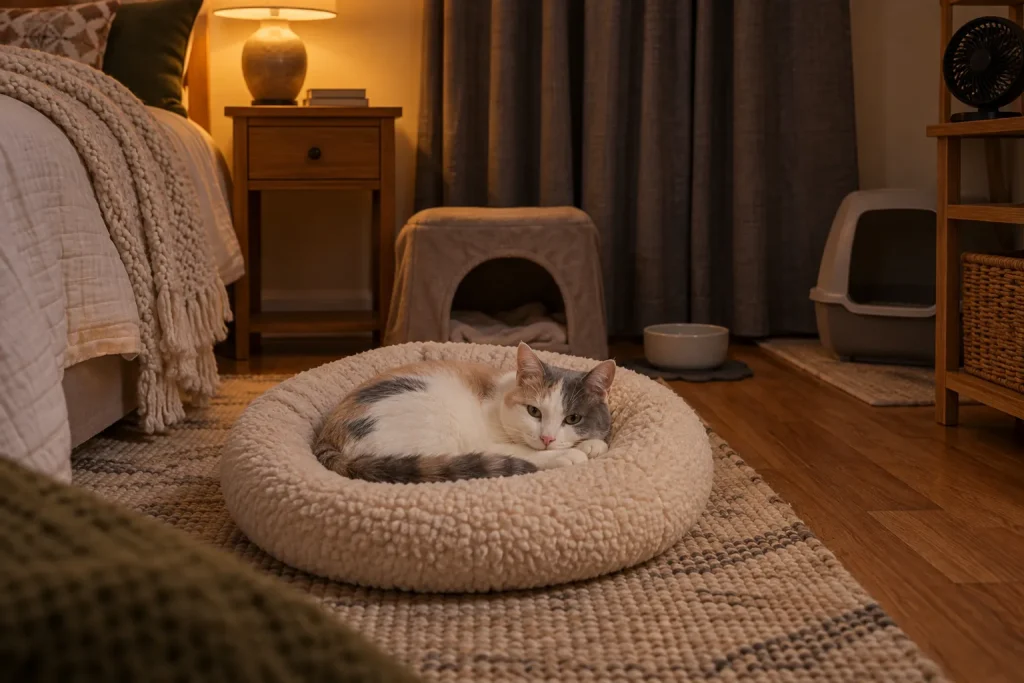
Tell guests there is a cat in the house and which door stays shut. Keep drinks, snack bowls and candy off low tables, and skip fog machines or strobe lights in rooms your cat uses. In a home with several cats, give each one a separate hiding spot so a scared cat does not take it out on a housemate.
Black cats are the unofficial mascots of Halloween, and some shelters once paused black cat adoptions every October over fears they would be harmed. According to HumanePro, such cases are rare, those bans tended to backfire, and many organizations now promote October adoptions instead. The best protection for any cat, black or not, is the same: keep them indoors and supervised during the holiday.
Curious where the spooky reputation came from? Our guide to black cat superstitions around the world covers the history, and black cats get their own day in August with Black Cat Appreciation Day. Bringing home a black kitten in October? Our list of black cat names has spooky, sweet and classy picks.
Call your veterinarian or an emergency animal hospital right away if your cat eats chocolate, sugar-free candy, wrappers, string or decorations, or if you notice vomiting, drooling that does not stop, tremors, a painful belly, straining in the litter box or lethargy. If you see string or thread coming from the mouth or rear, do not pull it.
For a possible poisoning, you can also call the ASPCA Animal Poison Control Center at (888) 426-4435, available 24 hours a day, 365 days a year, according to the ASPCA; a consultation fee may apply. Have the wrapper or package ready so you can say exactly what your cat ate.
The risks do not end at midnight. On November 1, sweep the porch and floors for dropped wrappers, check under sofas for stray candy, move the leftover haul into a closed cabinet and take down cobwebs and cords. Compost pumpkins before they turn moldy. Your cat may also be tired or a bit clingy after a noisy night, so keep the next day quiet.
Halloween is just the start of the holiday season. Next, read whether cats can eat turkey before Thanksgiving and how to cat-proof your Christmas tree before December, or see every cat-themed date ahead in our cat holidays calendar. Good Halloween cat safety is mostly planning, and the plan above takes about ten minutes.
Some of it is. Chocolate is dangerous for cats, sugar-free candy with xylitol can cause serious problems in pets, and wrappers can cause choking or blockages. Do not share candy with your cat.
The liquid is probably not toxic, but it tastes very bad and can cause heavy drooling and strange behavior. Call your veterinarian for advice.
It is best not to let them. Raw or carved pumpkin can upset a cat’s stomach and may grow mold quickly. Ask your veterinarian before offering any pumpkin.
Yes. Veterinary groups advise keeping pets indoors, ideally in a quiet closed room during trick-or-treating, with up-to-date ID and microchip details.
Set up a quiet room with litter, water, a bed and a hiding spot before dark, keep the door closed and add soft background noise such as music or a fan.
Questions about a photo or an order? Message us, we usually reply within 1 business day.